The Night Rishabh Pant Deleted a Trade Rumour in One X Reply — and What It Told Us About IPL 2024
26 September 2024 · A short post from a Delhi Capitals captain, a viral RCB trade claim, and the retention-rule backdrop that made the rumour spread
By IPL Contest Game Editorial Desk · Filed 26 September 2024, evening IST · Refreshed 6 August 2026

It took Rishabh Pant forty-seven words to end a transfer rumour that was spreading through the Indian cricket corner of X on the evening of 26 September 2024. The rumour had two parts: that the Delhi Capitals captain had approached Royal Challengers Bengaluru through his manager with an offer to step in for Faf du Plessis, and that Virat Kohli had vetoed the move because of what the original poster called “political tactics in Indian team as well as in DC.” Pant’s reply, posted from his verified handle RishabhPant17 with the post ID 1839253135581200470, was the kind of message a captain writes when the speculation has already done its damage: “Fake news. Why do you guys spread so much fake news on social media? Be sensible guys, so bad.” A second message a few minutes later made the warning broader. “Don’t create untrustworthy environment for no reason. It’s not the first time and won’t be last but I had to put this out. please always re check with your so called sources. Everyday it’s becoming worst.”
By the time Hindustan Times filed the cricket-desk story at 19:46 IST the same evening, the rumour was already off the timeline. The lasting record of the day is not the rumour. It is one X reply, one follow-up, the BCCI’s then-ongoing work on the 2024 mega auction retention framework, and a Delhi Capitals captaincy history that the rumour had flattened into a single cartoon.
Where the rumour came from, and how it moved
The post Pant rebutted was not a sourced item. It was a single user’s speculation written inside a longer thread of trade scenarios that other Indian cricket accounts were resharing through the afternoon. The claim was bundled: Pant “approached RCB through his manager,” RCB declined the approach, and the reason given internally was that Kohli did not want him at the franchise. None of the three claims was attributed. There was no link to a press release, no reference to a BCCI circular, no statement from either franchise, and no comment from Kohli or his representatives. The post presented itself the way confident trade rumours usually do on X — certain of tone, light on source.
Within minutes the pattern had run through its usual cycle. Reply accounts piled on, a few aggregator handles retweeted the thread as if it were a brief, and a section of mainstream cricket media picked it up because the headline was already trending. This is the information environment Indian cricket has operated in since the IPL’s first auction cycle in 2008: a fan post asserts, an audience amplifies, a denial follows, the denial becomes the headline. Pant’s reply landed inside that cycle and converted what had been a passing speculation into the day’s story by 9 pm IST.
What the reply actually said, line by line
Pant’s reply is short enough to read in one breath. “Fake news. Why do you guys spread so much fake news on social media? Be sensible guys, so bad.” The follow-up stretches to a sentence-and-a-half: “Don’t create untrustworthy environment for no reason. It’s not the first time and won’t be last but I had to put this out. please always re check with your so called sources. Everyday it’s becoming worst.” Read together, the reply does three things at once. It denies the rumour as a category, it asks the platform to slow down on amplifying unverified claims, and it takes personal responsibility for the correction by attaching the player’s verified handle.
What is striking is what the reply leaves out. It does not split the two claims and deny them one at a time. It does not name the original poster. It does not threaten legal action or refer to a manager’s statement. It does not invite a debate. The single-block denial is the same shape Pant has used for personal corrections, captaincy updates and fitness notes since his return from the 15-month injury layoff in 2024: short, in his own voice, on his own account, without any of the managed-language softening that comes from going through a franchise spokesperson. The cost of replying directly is that the denial itself becomes a news story. The benefit is that the correction lands in the same timeline the rumour was using.
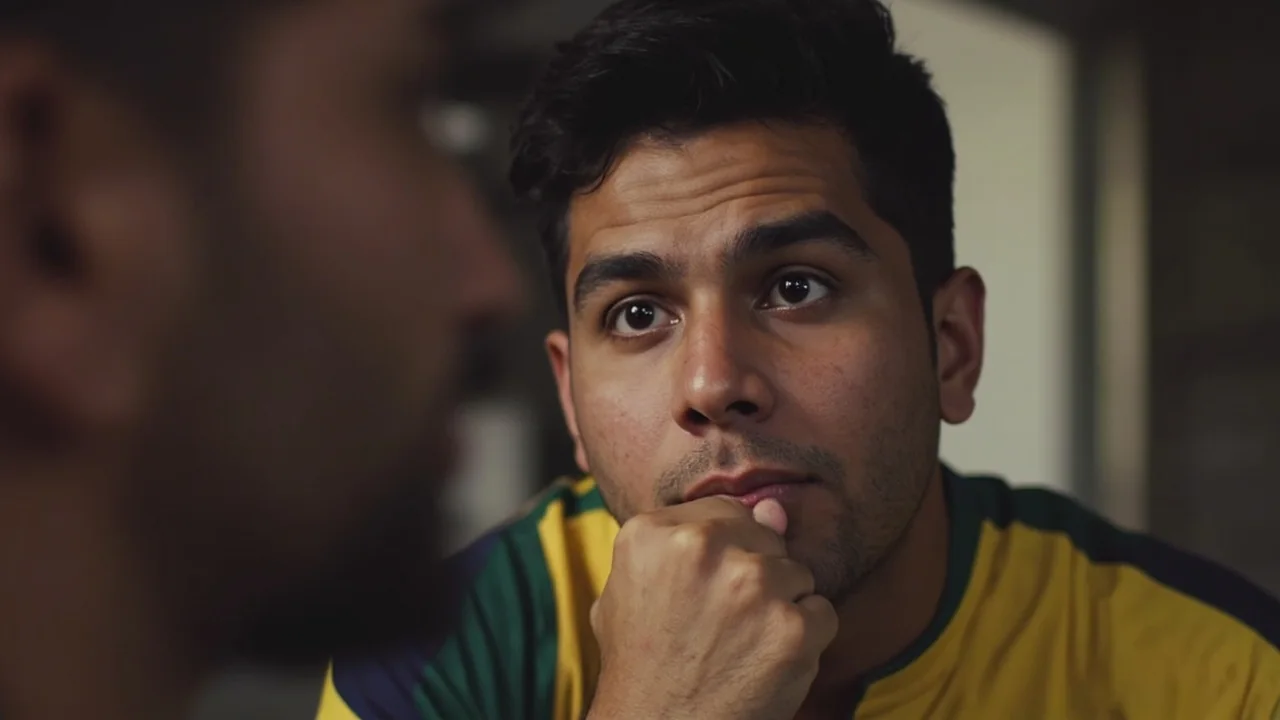
The 26 September 2024 reply landed inside the same thread in which the rumour had started circulating, which is why the correction travelled faster than the original claim.
Why Pant had already been the rumour’s favourite target
The RCB framing did not come from nowhere. Pant has been the most speculated-about Indian cricketer of the cycle in question — first because of the December 2021 car crash and its 15-month recovery, then because of the Delhi Capitals captaincy handover that followed, and most recently because of the relationship between his franchise and the others on the auction cycle. Before the rumour went up, three threads of IPL speculation had already been running through the same corner of X for weeks: whether the Capitals would retain Pant through the 2024 mega auction, whether Shreyas Iyer would resurface at a rival franchise, and whether the BCCI was ready to allow RCB a path back into the captaincy market. The rumour merged all three threads into one sentence.
For that reason, the rumour’s lifespan before Pant’s reply was unusually long for a fan post. It had been retweeted by accounts that usually stick to score updates, picked up by aggregator handles that often ignore pure speculation, and lifted into at least one mainstream cricket thread before the captain’s reply appeared. The structural reason the rumour worked is that it answered three questions fans were already asking in public, in a single confident paragraph. The reply had to do less than it looks: it had to detach the rumour from each of those three underlying threads.
What was, and was not, on the public record
The verified record of 26 September 2024 is narrow. It contains Pant’s two X posts from the verified handle RishabhPant17, with timestamps and the post ID 1839253135581200470, and the Hindustan Times cricket-desk story filed at 19:46 IST that evening. The reporter quoted the reply in full. The reporter quoted the follow-up in full. The story did not include a separate response from RCB, from Kohli, from Pant’s manager, from Delhi Capitals ownership, or from the BCCI. The rumour had no on-record source beyond a single fan post. Pant’s correction had the X timestamp, the handle, the post ID and the news cycle that followed.
What is useful about that asymmetry is that it lets a reader separate the rumour’s content from its grammar. The rumour sounded confident because confident trade talk reads well on X. The reply sounded serious because a verified handle attaching a denial to a personal account is harder to dismiss. The whole story sits in that gap. No franchise needed to clarify because the rumour had never reached the level of a sourced report. The BCCI did not need to clarify because the rumour did not refer to a BCCI decision. Pant’s correction worked because it landed in the only thread that the rumour had used.
Why the rumour hit during a retention-rule negotiation
Timing matters. The 26 September 2024 post landed during the same week the BCCI was still working through the 2024 mega auction retention framework. Multiple media reports at the time suggested each franchise would be allowed between five and six retentions, with no public decision yet on the Right to Match card. The 2022 mega auction had allowed only four retentions per side (with a maximum of three Indians) and no RTM, a structure the BCCI had set specifically to give the new entrants Gujarat Titans and Lucknow Super Giants a wider player pool. Two years later the same math was being reopened.
The 2024 IPL winners, Kolkata Knight Riders, were pushing for an eight-RTM model to retain their core. Sunrisers Hyderabad wanted retention flexibility because their three biggest overseas assets — Pat Cummins, Travis Head and Heinrich Klaasen — counted against the foreign-player cap. Franchises had been given a window to declare their retention lists, with the auction itself likely staged in late November 2024. Read against that backdrop, a Pant-to-RCB claim was not just idle chatter. It would have used one of RCB’s finite retention slots, would have forced a Delhi Capitals release, and would have made every other franchise’s retention math harder.
How the rumour would have changed the retention math
To see why Pant’s reply did more than air a grievance, it is worth tracing what the implied move would have meant inside the league’s rules at the time. RCB had retained Faf du Plessis as captain for the 2024 season. Replacing him mid-cycle would have required a release, a re-entry into the auction pool, and a fresh retention slot consumed. Delhi Capitals had already released Shreyas Iyer, who had been picked up by Kolkata Knight Riders at the 2024 mega auctions. A Pant release would have put a marquee Indian white-ball captaincy candidate on the open market at the same time every other franchise was finalising its five-to-six retentions.
With the eight-RTM proposal still alive and the RTM-card question still open, an unscheduled Pant auction entry would have changed what each of the other nine franchises was planning. It is the structural reason the rumour circulated as widely as it did — not because the claim was sourced, but because every franchise had a stake in the answer. Pant’s reply closed that question two months ahead of the deadline. By the time the BCCI published the final retention framework in October 2024, the Delhi Capitals had one fewer contingency to manage.
What the post said about how India cricketers now manage their own story
Indian cricketers did not always run their own clarifications. For most of the IPL era, transfer rumours were absorbed by franchise media teams, with a press release or a quiet non-comment as the standard response. Pant’s 26 September 2024 reply sits in a different pattern. It is short, direct, written in the player’s own voice, on the player’s verified account, and it explicitly asks the platform to verify sources before amplifying. It treats the rumour as a category of speech rather than a single claim, which makes the denial harder to pick apart.
Other India cricketers have used similar direct X posts in 2025 and 2026 to correct similar rumours, often in the same condensed style. The template works because the correction reaches the same audience as the rumour, with the same velocity, and uses the same handle a reader already followed. It does not always beat the rumour — some claims circulate faster than any reply — but when the player responds quickly enough and the reply is short enough to fit a screenshot, the screenshot becomes the durable record. Pant’s reply is one of the cleanest examples of how the format is now used.
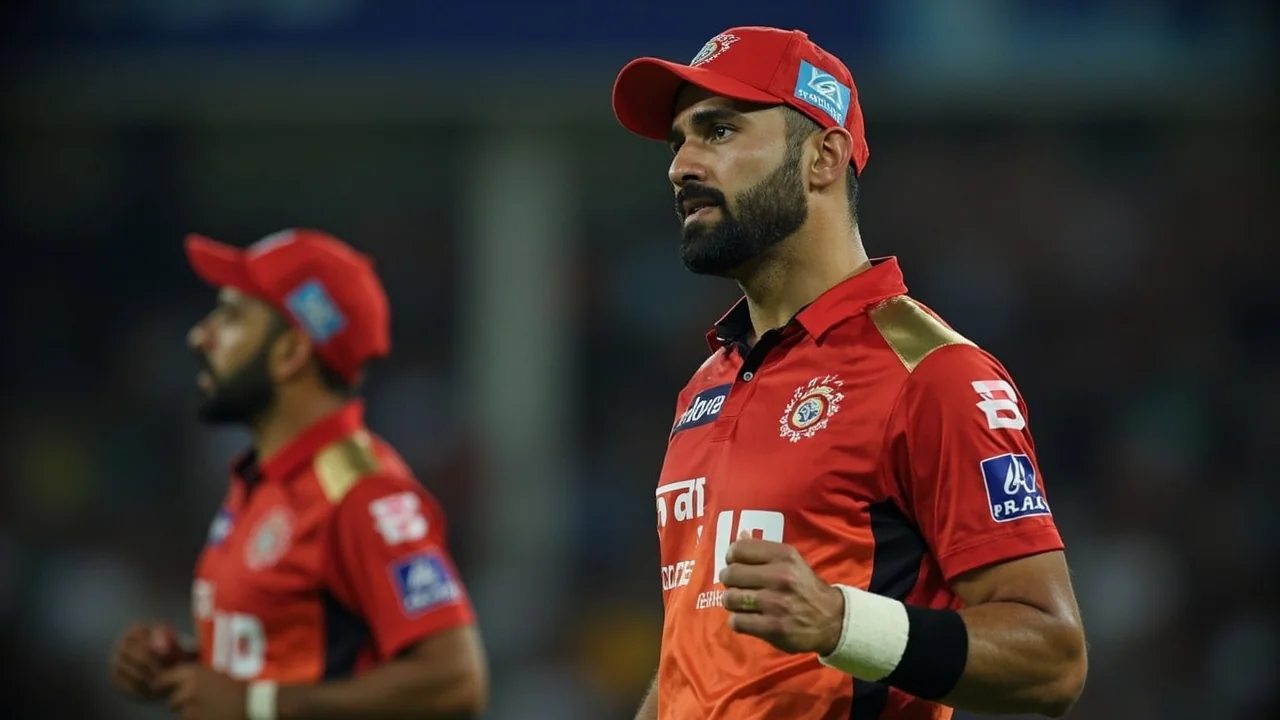
The retention framework that defined the November 2024 mega auction was being negotiated inside the BCCI the same week Pant’s reply went out, which is the larger context in which a captaincy rumour would land.
The captaincy timeline the rumour had flattened
The Delhi Capitals captaincy history around the rumour does not include an RCB move at any point. Pant took the Delhi armband in 2021 when regular captain Shreyas Iyer was ruled out for the entire season through injury. He led the side in 2022. He missed the 2023 edition because of the December 2021 car crash, during which David Warner was named Delhi captain for the year. Pant returned in 2024 after a 15-month injury layoff and was reinstated as captain before the 17th edition of the IPL. Iyer had been released by the Capitals ahead of the same window and was bought by Kolkata Knight Riders at the 2024 mega auctions. By the time Pant’s reply went out, he was the only full-time Indian captaincy option the Capitals had publicly named for the next cycle.
On the other side, RCB had retained du Plessis as captain for the 2024 season and was not publicly entertaining a mid-cycle captaincy change. IPL rules at the time did not allow a captaincy transfer inside an active season. A move involving Pant would have required RCB to decline to retain du Plessis, free up an Indian retention slot, and enter a pool where Pant was already a Delhi retention candidate. The structural logic of the rumour did not match the league’s own rules. Pant’s reply did not need to walk through all of that. It only needed to point at the gap between the rumour and the record, and let the rest of the timeline catch up.
What changed inside the next two months
Inside the following week, the BCCI cleared a path toward the final retention framework that fed into the November 2024 mega auction. Each franchise received a window to declare its retention list. KKR’s eight-RTM proposal did not survive contact with the wider owners’ group, and the final rule ended closer to the five-to-six-retention band that the media had reported on the day of the reply. Delhi Capitals were able to plan around Pant as the side’s anchor retention without negotiating against the possibility of an RCB move. Pant’s denial did not by itself cause those decisions. It removed one variable from a very crowded negotiation.
For fantasy managers tracking the window, the practical reading was different again. The 2024 mega auction was always going to reset the league’s price list. Pant’s reply meant his cricket card went into the Delhi retention slot rather than the auction pool. That stabilised Pant’s projected role for the 2025 season, shifted speculative attention to other retention candidates, and forced an early-redraft of any 2025 fantasy projection that had priced him as a movable asset. The effect was small, but it was the kind of small effect that makes one X reply worth tracking in real time during a retention window.
What the post still teaches, two years on
Reading the reply again in 2026, the durable lesson is not that Pant denied a rumour. Most player denials are routine. The lesson is in the form the reply takes: a verified personal handle, a denial that treats the rumour as a category, a follow-up that asks the platform to verify sources, and a deliberate absence of personal attack or legal threat. The four moves together turn a correction into a template. Other India cricketers have used the same shape in similar situations since.
For an editorial desk that covers the IPL, the post is also the clearest available record of what the public sources actually contain. The verified facts are the post, the handle, the post ID, the time stamp, the Hindustan Times filing, and the BCCI retention-rule backdrop. The fan’s two-sentence claim is the only “source material” the rumour rested on, and it was taken down by the player’s reply inside an hour of circulation. Two years later, the more useful detail to remember is not the rumour’s content but the speed at which it stopped being a rumour at all.
For more IPL 2024 retrospective reads, transfer-window analysis and the wider editorial coverage of the season, the IPL Contest Game blog hub collects the rest of the cycle in one place.
More IPL reads
Captain picks
Captain selection structure with form, venue and head-to-head weighting for T20 contests.
Live matches
Score updates, conditions notes and live points tracking across the current fantasy slate.
Match prediction guide
Pitch, weather and venue reads that feed into fantasy XI decisions before the toss.